

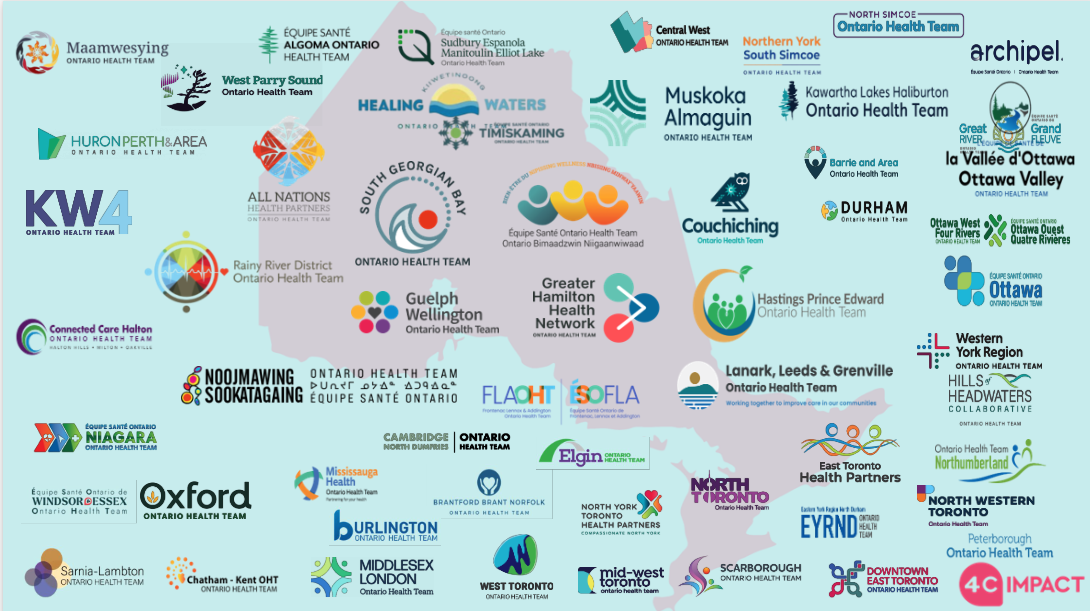
For the first time since Ontario’s Ontario Health Team (OHT) policy was introduced, leaders from all 58 OHTs, Primary Care Networks (PCNs), and lived-experience partners came together—self-convened, self-organized, and united by shared purpose. The inaugural Integrated Care Action Summit (ICAS) was created by those doing the work every day, at every level, across every community. That origin story mattered. You could feel it in the room: a sense of possibility, momentum, and collective responsibility for what comes next. As one participant put it, “The energy, the momentum. I think it’s magical.”
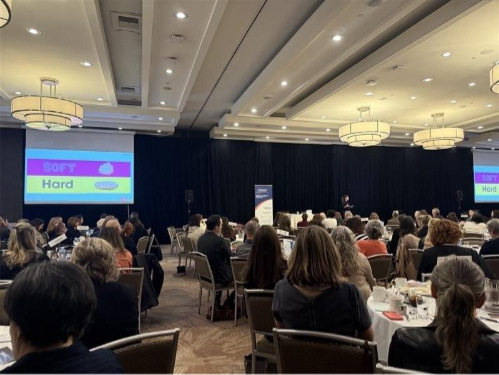
Jodeme's keynote on day 2 catalyzed that collective ambition. It invited leaders to move into ways of having an even greater impact—toward integrated care, population health, and the systems we know are possible. It was a call to challenge inherited structures, disrupt old patterns, and step boldly into new ways of working together. But more than a keynote, it created a container where over 300 people could reflect on how real change happens at scale: through relationships, mindset shifts, and the courage to stand in the space in between—the space where integration lives. This is the terrain where discomfort, ambiguity, creativity, and possibility coexist. It is also where many have already been quietly leading at the edges, often unseen, doing the slow and essential work of stitching our system together. In that space, the “soft skills” reveal themselves as the hard skills—trust, relational reciprocity, adaptive leadership, and the capacity to hold multiple truths at once. These are not optional; they are the core capabilities that allow OHTs and PCNs to operate across roles, mandates, and sectors. Integration is not only about models and architecture. It is about how we show up, how we regulate our own and each other’s nervous systems, and how we treat connection as critical infrastructure.
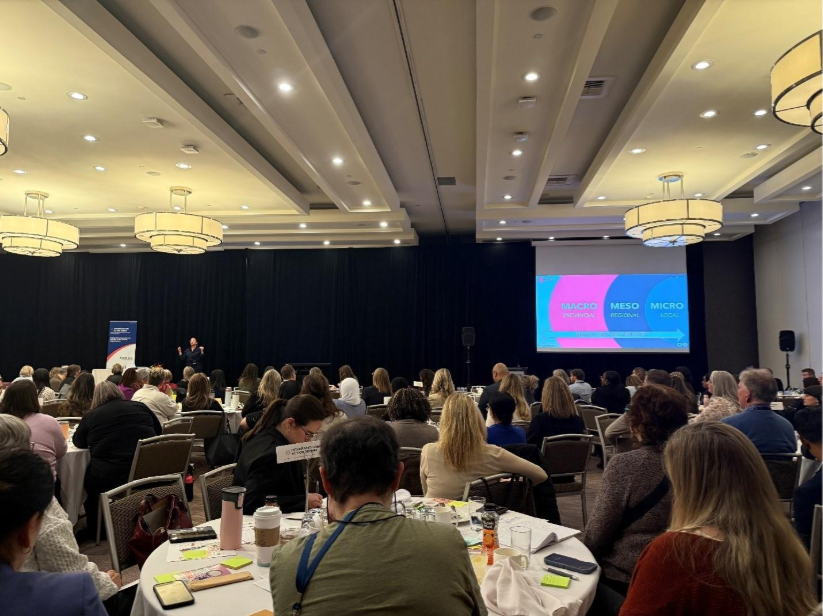
Building on Dr. Jane Philpott’s opening keynote on Ontario’s commitment to primary care transformation including attachment and team-based models, Jodeme emphasized that when we treat primary care as a strategic lever—not just another priority—we create conditions for prevention, continuity, and coordinated care to thrive. High performing primary care is a powerful anchor for a thriving integrated care system. Strong foundations in primary care create high-performing health systems because they shift the system’s centre of gravity toward prevention, continuity, coordinated care, and population well-being. When primary care is strong, the entire system becomes more resilient, more equitable, and more effective. Additionally, a strong primary care system must be integrated with the rest of health and social care because primary care alone cannot carry the full complexity of people’s lives — and the system fails when it operates in silos. Integration is what turns strong primary care into a high-performing ecosystem that delivers continuity, equity, and population-level impact. The evolving partnership between OHTs and PCNs represents one of Ontario’s greatest opportunities to accelerate population health through integrated approaches rooted in community and supported by system-wide collaboration. When provincial priorities like Ontario’s primary care action plan are leveraged as enablers and aligned with local strategies, we unlock the potential for impact at scale.
A unifying theme echoed through the Summit: We are one team. The energy was collaborative, not competitive. It was driven by a shared conviction that the challenges we face cannot be solved in isolation. Radical collaboration is no longer an aspiration; it is the new operating model. What stood out most was the optimism and creativity in the room. Leaders were willing to work differently, to experiment, to stretch beyond traditional boundaries, and to lead with courage.
As Emmi Perkins, Director of Transformation at the Guelph Wellington OHT captured so powerfully: “Colleagues. Friends. Rockstars. Warriors. THE COUNTERFORCE.” The Counterforce is both belief and action centred on knowing that we already have what we need: the assets, the wisdom, the relationships, and the collective capacity to create outcomes that matter.
Kristin Kerr, CEO of Stonehenge Therapeutic Community, reflected it beautifully: “Meaningful collective impact happens when we commit to shared purpose, shared priorities, and shared action.” This work is not about systems alone. It is about people, vision, and courage. It is about shifting from fragmentation to orchestration. It is where people with lived experience and those in health and social care converge to enable population health.
The opportunity ahead is clear:
Keep the momentum alive. Lean into collaboration.
Build the relational infrastructure that allows trust to flourish.
And embrace shared responsibility for a healthier, more integrated future for Ontarians.
Integrated care and population health are not parallel workstreams. They are interdependent priorities requiring unified strategies and shared accountability. The Summit was a reinforcing spark. The real impact will come from what we do next—together—as one team, united by purpose, committed to radical collaboration, and ready to pattern our possible future.
This blog is Part 1/2 of our series on the 2025 Integrated Care Action Summit and was co-created by Jodeme Goldhar, Samantha Laxton and Meghan Perrin.
Read Part 2: Our Untapped Collective Potential : A Masterclass in deepening collective leadership capacity here.